


| Senescent cancer cells can persist after treatment and affect tumor control, it is important to understand their role in immune evasion for therapeutically relevant. One recent study showed that therapy-induced senescent cancer cells upregulate PD-L1 through transcriptional regulation and RPN1-dependent glycosylation, enabling immune evasion and tumor regrowth. Another study developed a SA-β-gal-responsive agent that binds PD-L1 for cellular uptake, accumulates in lysosomes of senescent tumor cells, and reduces immunosuppressive signaling while promoting antitumor responses. Together, these findings highlight senescent tumor cells as a relevant focus in cancer immunotherapy research. | |||||||||||||||||
|
Therapy-induced senescent cancer cells contribute to cancer progression by promoting ribophorin 1-dependent PD-L1 upregulation (Nature Communications, 2025) Highlighted technique: Fluorescent SA-β-Gal detection dye enables co-staining and quantitative analysis of cellular senescence by fluorescence microscopy or flow cytometry. |
|||||||||||||||||
|
Chemical anchoring of immunotherapeutic drugs within senescent tumor cells overcomes senescence-driven immunotherapy resistance (Nature Communications, 2026) Highlighted technique: For evaluating cell damage-associated responses, an extracellular ATP assay kit is available and can be measured reproducibly using a detailed protocol. For lysosomal analysis, there are pH-independent dye and pH-sensitive dye, combining these dyes enables a more detailed evaluation of lysosomal function in terms of pH changes and lysosomal quantity. |
|||||||||||||||||
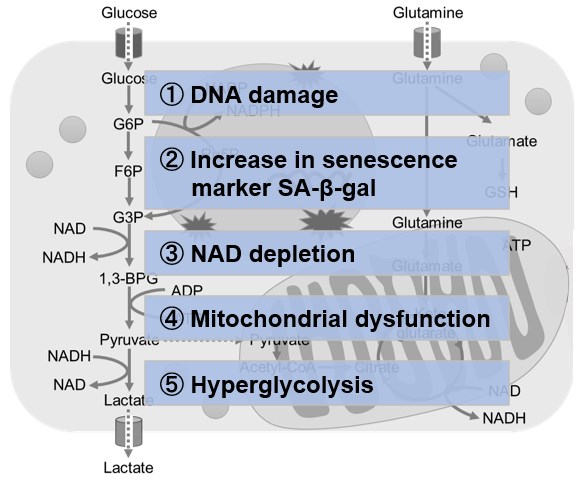
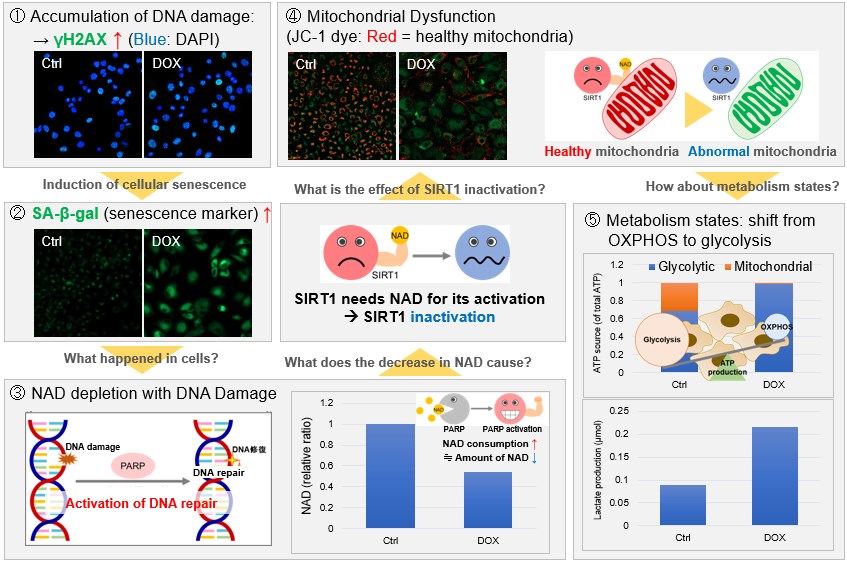
| Application Note > Senescent Cells Lose Mitochondrial Activity
|
|||||||||||||||||
Senescence, Lysosome and Oxidative stress Indicators
|
|||||||||||||||||
Targeting Senescent Tumor Cells in Cancer Immunotherapy [May. 12, 2026]
Digital Brochure and Other Information
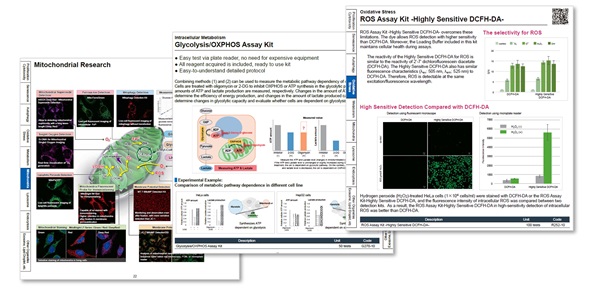
Curious about other Dojindo products? Discover more with our digital brochure! : Cell Function Analysis
 |
 |
Stay informed and connect with us on our LinkedIn page!