


|
Lysosomes regulate degradation, membrane integrity, and immune-related processing. Lysosome damage responses are important for understanding how organelle injury influences disease-relevant cellular outcomes. Recent studies identified Parkinson's disease-associated VPS13C as an early factor recruited to damaged lysosomes, suggesting a membrane-protective response before severe rupture. In macrophages lacking TMEM175, lysosomal stress during tumor debris processing promoted inflammatory cytokine release and responses that help present tumor antigens to CD8⁺ T cells. These findings support lysosome damage responses as a relevant focus in disease research. |
||||||||||||||||||||||
|
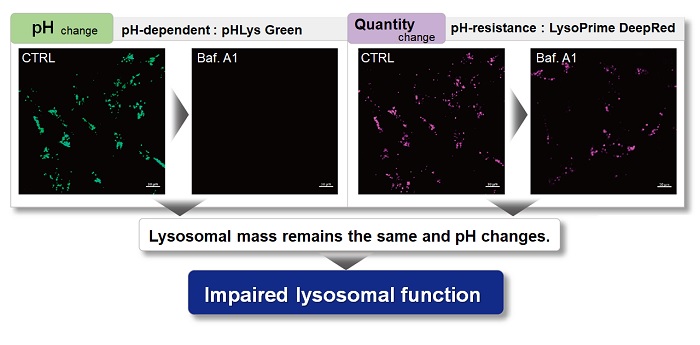
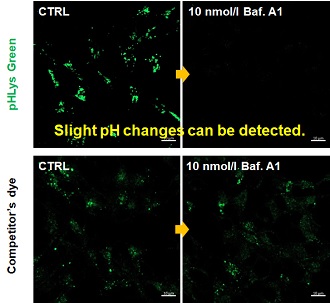
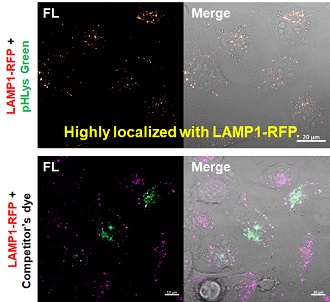
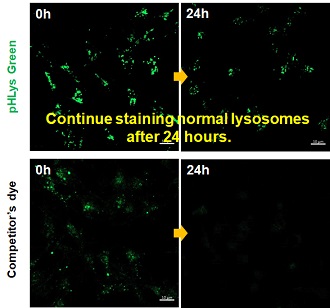
Summary: Highlighted technique: By combining pH-dependent and pH-independent lysosome probes, lysosomal pH and mass can be assessed by fluorescence imaging without immunostaining or transfection. |
||||||||||||||||||||||
|
Summary: Highlighted technique: Evaluating Ca²⁺ dynamics and intracellular ROS helps clarify lysosome-associated inflammasome activation. As a complementary approach, detecting intracellular and lysosomal lipid radicals may provide additional information on oxidative membrane stress associated with lysosomal dysfunction. |
||||||||||||||||||||||
|
|
||||||||||||||||||||||
| Application Note > Accurate Measurement for Lysosomal pH changes
|
||||||||||||||||||||||
All Related Techniques
|
||||||||||||||||||||||
Lysosome Damage Responses in Disease Biology [Jun. 16, 2026]
Digital Brochure and Other Information
Curious about other Dojindo products? Discover more with our digital brochure! : Cell Function Analysis
 |
 |
Stay informed and connect with us on our LinkedIn page!